Drag to rotate
Optional audio tap · Illustrative only · Try Spatial Demo
Audio demo is illustrative and user-initiated. It is not a calibration measurement or room simulation.
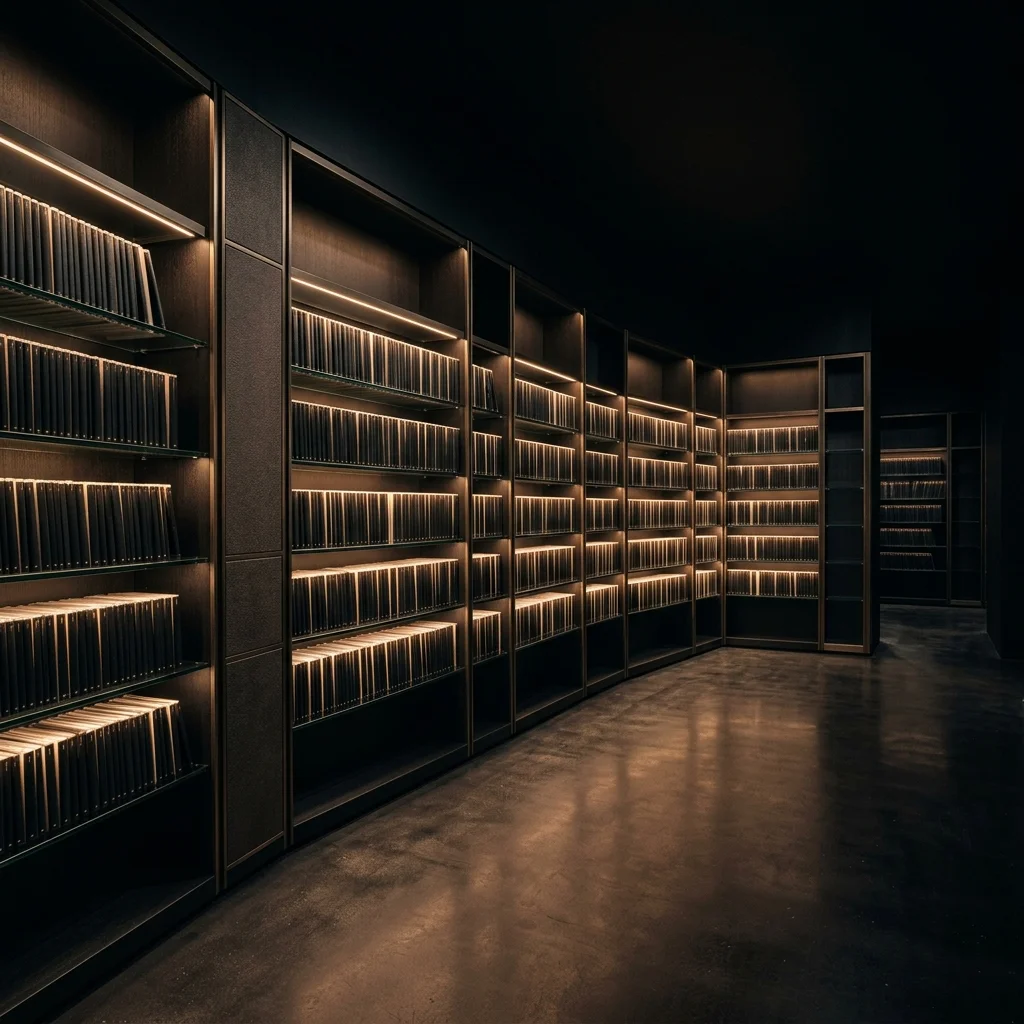
A private film library should feel immediate, reliable, and cinematic. Cinema Machina maps the formats, storage, metadata, playback endpoints, and display path before the first title is requested.
Media library organization, the home media server, metadata, and access paths are planned together so a personal media library behaves like a private streaming service without sacrificing the source.
(Struggling to find high-quality titles? Check our film availability guide for the UAE & India to find reference-grade sources.)
Choose a layout. Speaker zones light up, height channels rise, and object audio appears above the listener.
Optional audio tap · Illustrative only · Try Spatial Demo
Audio demo is illustrative and user-initiated. It is not a calibration measurement or room simulation.
 TrueHD Atmos
Full-bandwidth bed + object layer. Dolby Atmos metadata rides on TrueHD.
 DTS:X
DTS:X
Metadata-driven object steering. Lossless DTS-HD MA core.
 DTS-HD MA
Studio-master fidelity. Lossless extension above the DTS core.
Direct channel payload. No encoding, maximum bandwidth, no spatial metadata layer.
 Dolby Digital+
Lossy compressed. Streaming delivery only. Not a lossless format.
Object-based immersive at the top. Lossy compressed at the base.
Up to 128 simultaneous objects. Overhead + surround bed. Dynamic spatial placement.
Metadata-driven object steering. Speaker-layout adaptive rendering.

Mathematically lossless. Up to 24-bit / 192 kHz. Carries the Atmos object layer.
Studio-master fidelity. Lossless extension codec above DTS core.
AC-3. Up to 5.1ch. Lossy stream.
E-AC-3. Up to 7.1ch. Improved lossy.
Legacy 5.1ch lossy. Fallback compatibility layer.

Per-scene dynamic metadata. 12-bit mastering. Cinema-grade tone mapping.

Scene-adaptive dynamic metadata. 10-bit open standard.

Static metadata baseline. 10-bit. Most widely supported.
SDR on the right. Drag left for a visual illustration of HDR presentation differences.
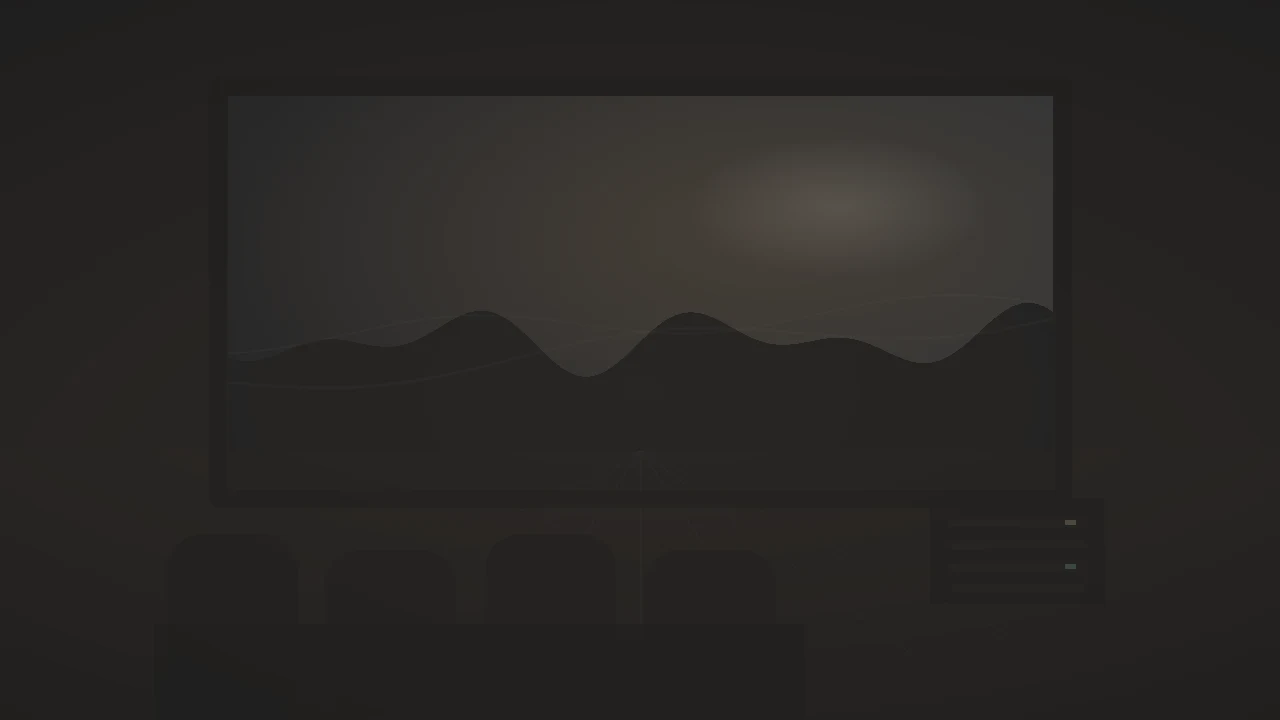
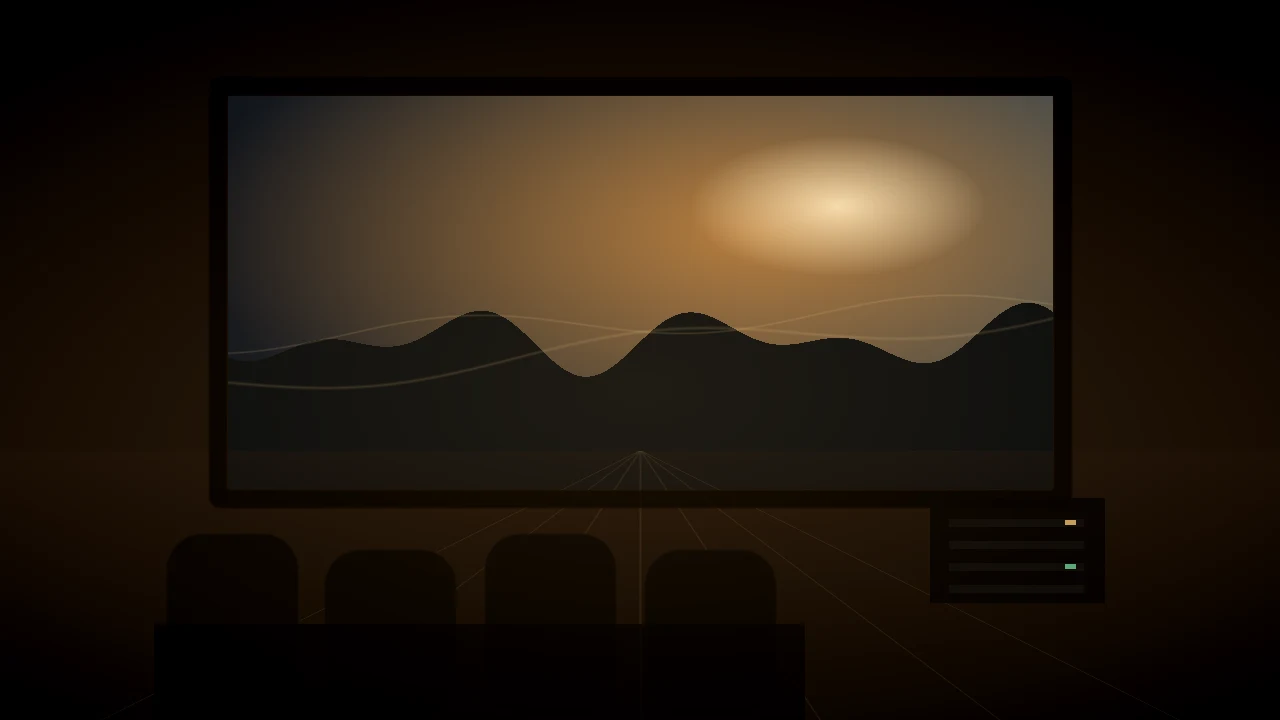
Illustrative visualisation, not a calibration measurement.
Container, chapter map, subtitles, mastering metadata.
Frame-rate match, dynamic range output mode, audio bitstream.
Codec decode path, channel map, room correction routing.
HDR negotiation, peak highlights, calibration constraints.
Channel bed + height/object rendering to room geometry.
No silent fallback. No untracked conversion. Clean reference path.
Cinema Machina selects the right endpoint for the room, display, processor, and client behavior.

Streaming-first refinement and intuitive UX.

Hybrid local + streaming with AI upscaling.

Local playback focus with broad format support.

Stable endpoint for dedicated media zones.

Power-user local architecture with deep codec control.


Server-based library management with NAS integration.
Redundant NAS holds the master files. Media servers catalog and route bitstreams to the appropriate endpoint.


Three tiers, from a living-room 5.1 to a dedicated object-first screening room. The tier you build decides how much of your library’s fidelity reaches the seat.
Preferred request formats are reviewed manually; availability is confirmed after private review.
Lossy codecs reduce payload size to save bandwidth. Lossless codecs preserve original studio master precision. Object-based formats add dynamic placement metadata above the channel bed.
SDR uses a baseline luminance map. HDR10 uses static metadata. HDR10+ and Dolby Vision use dynamic scene-level metadata to better guide highlight and shadow behavior per scene.
Cinema Machina focuses on legal Blu-ray / 4K UHD Blu-ray availability review and owned media collection planning for private clients.
Start with your room, your display, your processor, and your viewing behavior. Cinema Machina maps the right library architecture from there.
Remote sessions cover NAS planning, Plex/Jellyfin behavior, reference-format priorities, and endpoint constraints before a library grows around the wrong assumptions.